Structure and Specifications
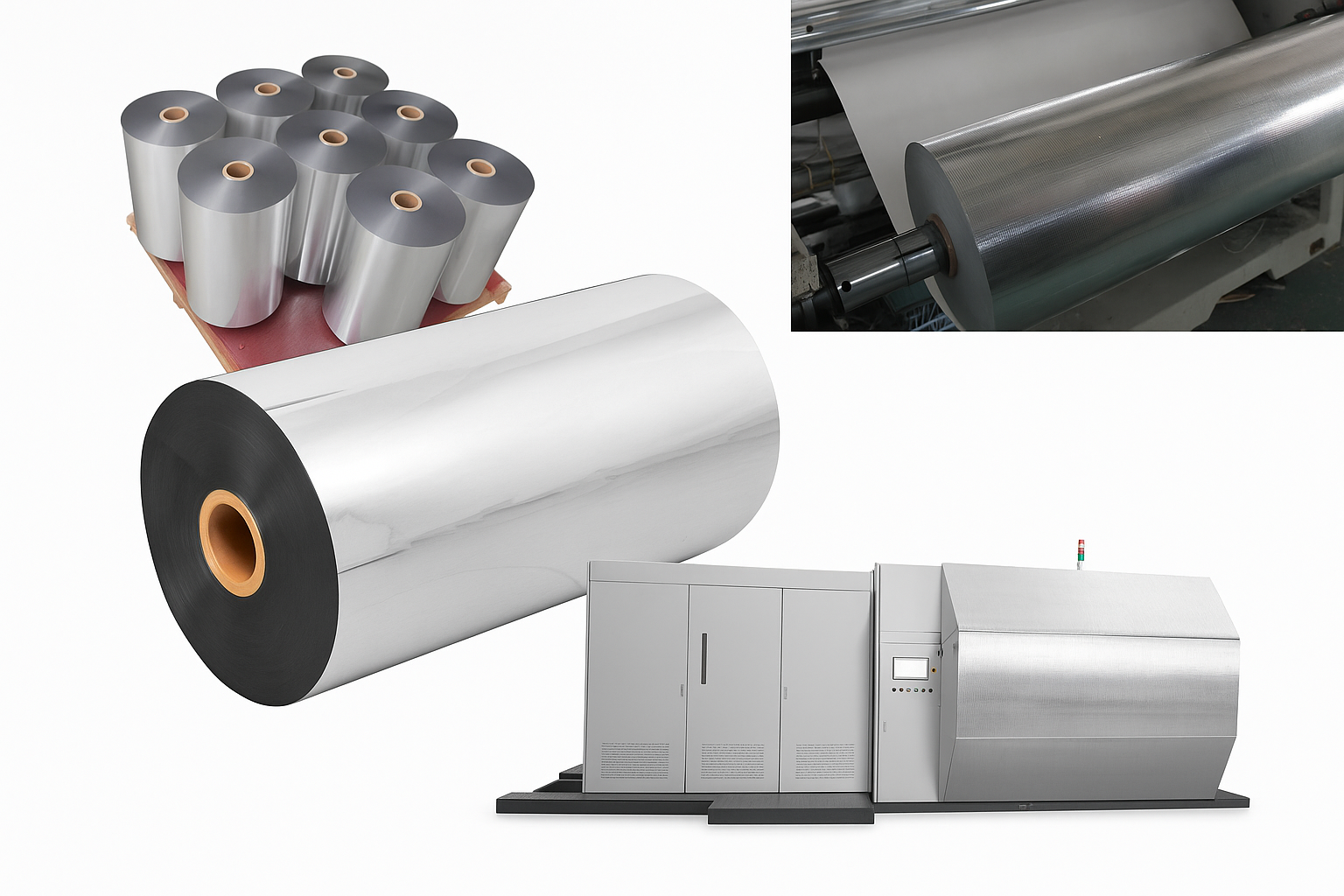
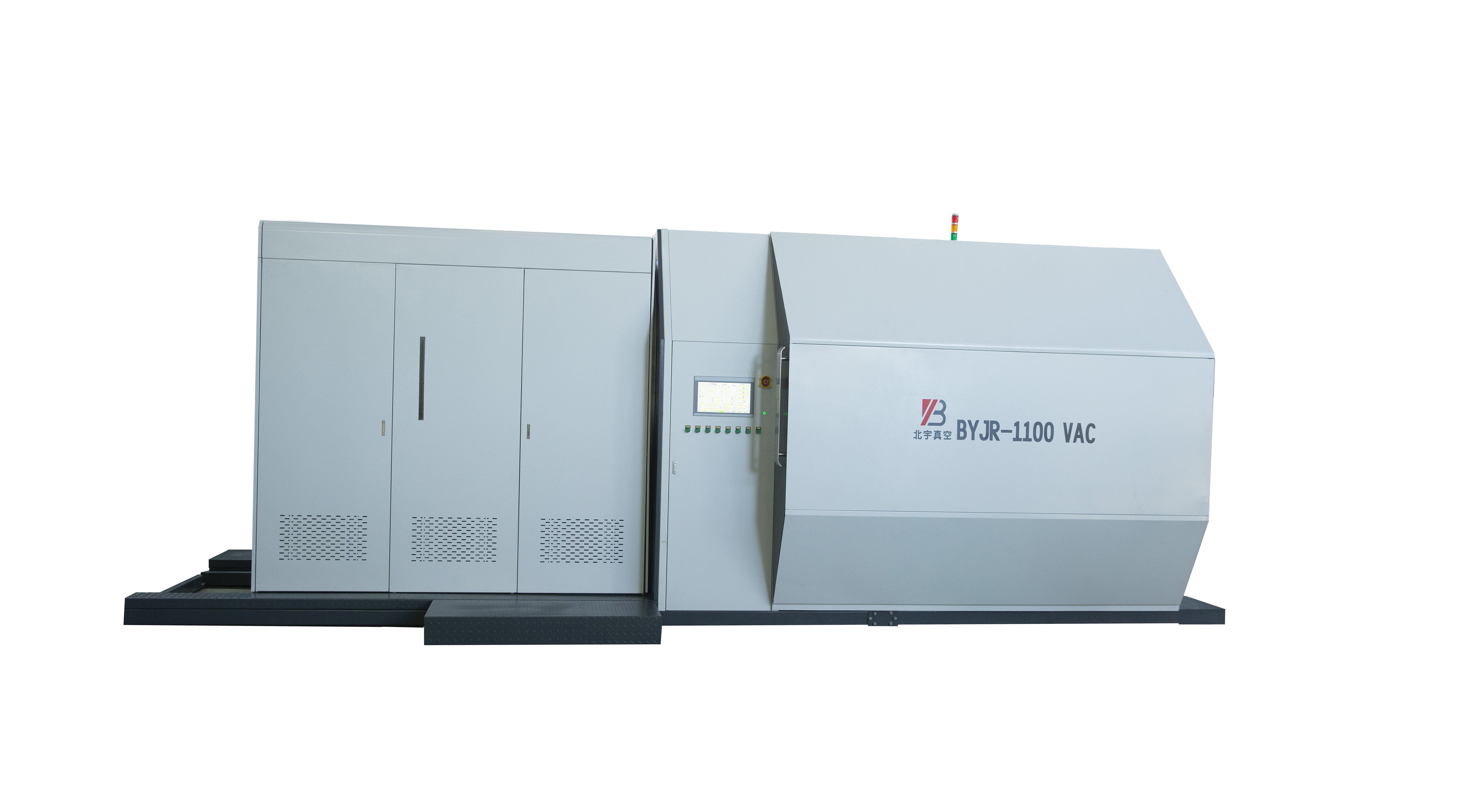
The system adopts a roll-to-roll (R2R) vacuum coating process, enabling high-efficiency metal film deposition on continuously moving flexible substrates. The base film undergoes unwinding, deposition, and rewinding entirely within the vacuum chamber, achieving stable continuous production. It supports single-sided or double-sided simultaneous coating, ensuring high consistency and productivity—ideal for long-duration, large-scale industrial operation.
Coating Methods: Magnetron sputtering, Cathodic arc deposition
Applicable Substrates: PET, PE, BOPP, and other flexible polymer films
Substrate Thickness: ≥ 0.4 μm
Coating Modes: Single-sided or double-sided simultaneous coating
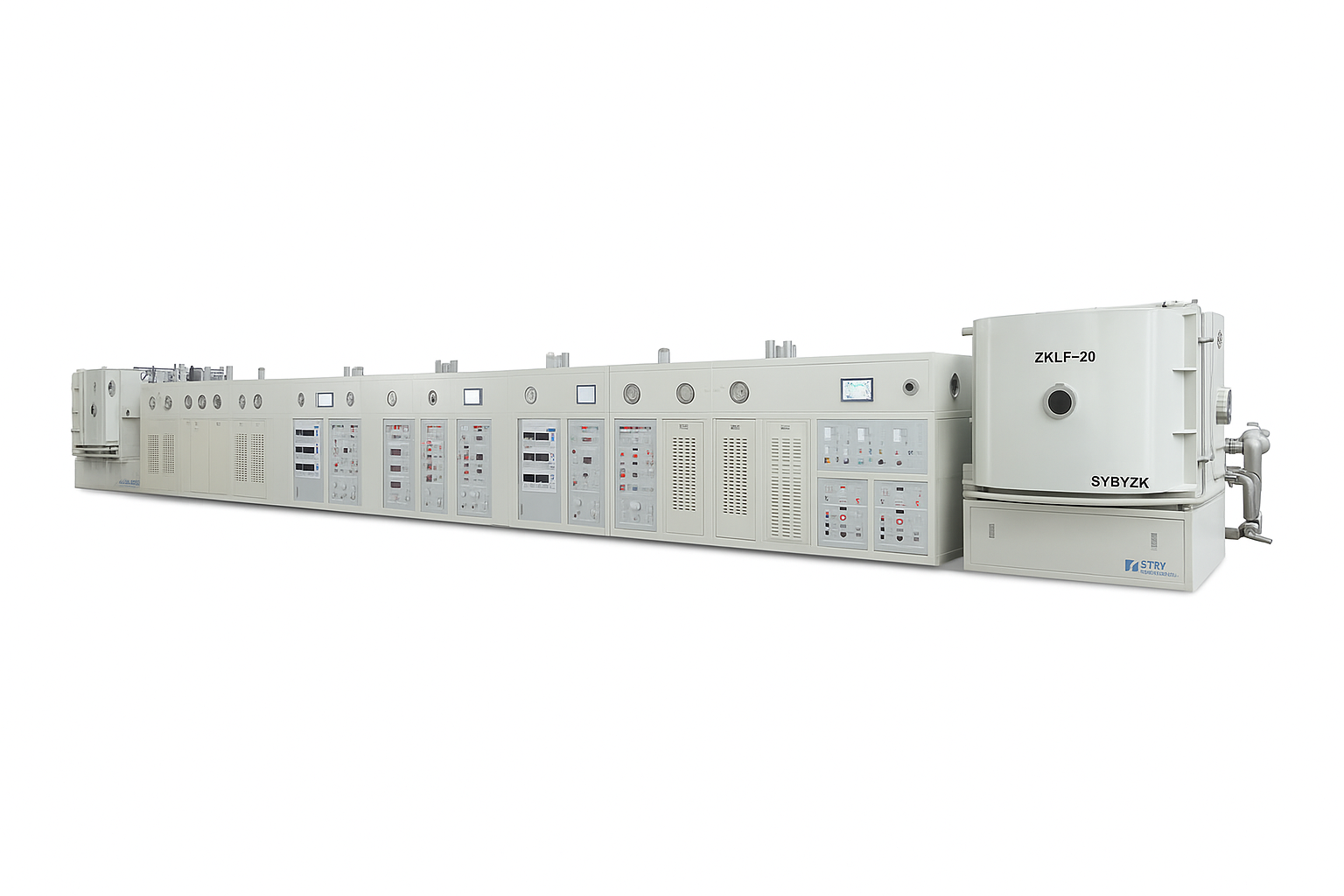
The chamber features a modular vertical or horizontal design, with independent zones for unwinding, deposition, and rewinding, effectively preventing particle contamination and cross-interference. The reinforced vacuum chamber combined with a precision web-guiding system ensures stable film transport and uniform coating, suitable for continuous industrial-scale production.
Targets and Process Configuration
The system can be equipped with multiple metal targets and hybrid processes to meet the requirements of various functional coatings in electronics, energy, and packaging industries.
Target Materials: Aluminum (Al), Copper (Cu), Nickel (Ni), Titanium (Ti), etc.
Process Principle:
Using magnetron sputtering or cathodic arc deposition, metallic target materials are ionized under vacuum and deposited onto the substrate surface, forming a dense, uniform metallic layer.
Double-Sided Coating:
The equipment can perform simultaneous two-sided deposition, significantly improving production throughput and film symmetry.
Web Handling System:
Equipped with high-precision tension control and automatic edge correction, ensuring smooth and stable film movement during coating. Film thickness uniformity is controlled within ±3%, even during continuous operation.
Vacuum Chamber and Control System
The vacuum chamber adopts a multi-zone structure, with independent control of the deposition, transition, and winding sections to prevent contamination by dust or residual gases. The vacuum system uses a turbomolecular pump + mechanical pump combination, achieving an ultimate vacuum of 5×10⁻⁴ Pa, ensuring a clean and stable deposition environment.
The fully automated PLC control platform enables real-time monitoring of key parameters such as sputtering power, substrate speed, vacuum pressure, and gas flow. A closed-loop control system automatically adjusts process parameters to maintain coating consistency. Multiple recipe storage and recall functions allow fast process switching between different materials and product batches.
Depositable Materials and Film Performance
The system supports the deposition of various functional metal films, including conductive, reflective, barrier, and corrosion-resistant coatings.
Typical Coating Materials and Properties:
Aluminum (Al): High reflectivity, low oxygen permeability — ideal for packaging and decorative films
Copper (Cu): Excellent conductivity — used in electronic components and current collectors
Nickel (Ni): Corrosion-resistant and oxidation-stable — suitable for energy and functional films
Titanium (Ti): High hardness and strong adhesion — for protective and functional coatings
Applications
The roll-to-roll vacuum coating system is widely used in the electronics, energy, optical, and high-performance packaging industries, including:
Electronic materials: Metallization of solid capacitor foils
Energy materials: Coating of lithium battery current collectors (metal conductive layers)
Functional films: Conductive, antistatic, and barrier coatings on PET, PE, BOPP, and other polymer substrates
Packaging films: Metalized layers for high-barrier food and pharmaceutical packaging materials
The roll-to-roll vacuum coating system integrates high-efficiency deposition, precise process control, and automated production to form high-adhesion, uniform metal coatings on flexible films. It offers outstanding advantages in stability, coating quality, and cost efficiency, making it an ideal solution for large-scale metallization of flexible materials in the electronics, energy, and functional packaging sectors.